Reading and looking are different tasks
The UNESCO introduction presents calligraphy as an art of writing, practised in different scripts and settings. If you cannot read the text, begin by stating that limit. You can still observe how a stroke changes thickness, how forms occupy space and how a line moves across a surface. Do not assign a mood or philosophical meaning as if it were the literal content. A label, translation or knowledgeable guide can supply the words; your own attention supplies an observation.
Choose one line to follow
Stand at a permitted viewing distance and choose a line rather than scanning the whole work. Notice where a mark begins heavily, becomes lighter or seems to stop. Then compare the spacing between forms. A photograph may hide scale and surface, so record the dimensions from the label when supplied. Do not claim that an expressive shape proves spontaneity; a viewer cannot know the preparation from appearance alone. You can describe energy without inventing the artist’s state of mind.
Let a translation return you to the surface
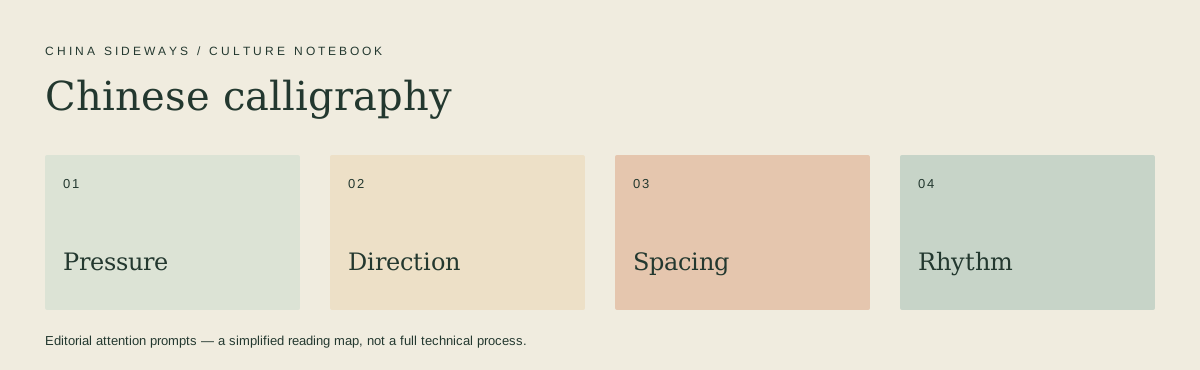
After reading a translation, look again and notice whether your attention changes. Keep the text’s meaning separate from the specific visual choices you observed. If a guide explains the script, record that term with the object title. A first encounter becomes useful when you leave with one concrete comparison, not a list of compliments. The editorial diagram on this page offers looking prompts, not a chart of scripts or a model of correct brush technique.
Choosing a calligraphy class as a traveller ↗
Source desk
Consulted 12 October 2026. Source pages establish cultural context; the viewing exercises and booking questions are editorial advice. No specific class, concert or private workshop is represented as currently bookable. Historical figures in heritage descriptions are not current practitioner statistics.