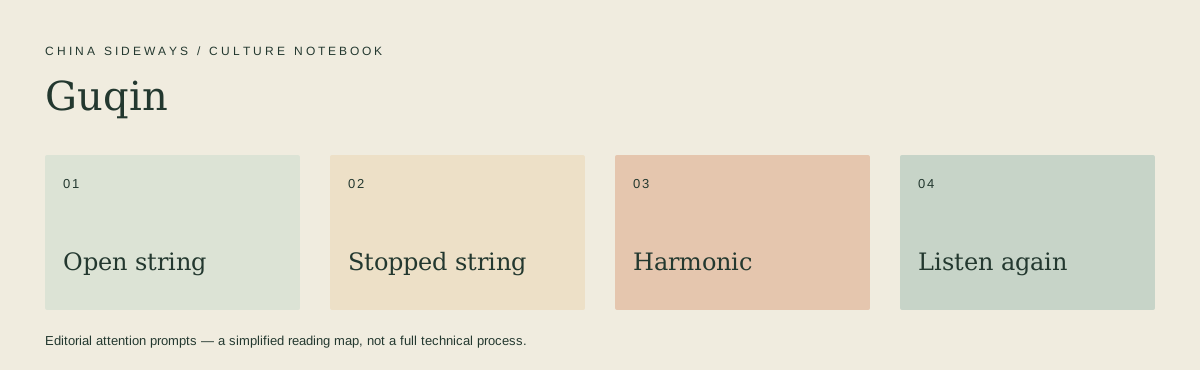
Listen for three kinds of sound
UNESCO’s introduction distinguishes open-string, stopped-string and harmonic playing on the seven-string guqin. Begin with that small vocabulary rather than a history of every named composition. Play a short section twice. The first time, follow when a note begins and how long it remains audible. The second time, listen for a change in texture or a pitch that seems to move. You do not need to identify a technique perfectly to notice a difference. Keep your uncertainty in the notebook instead of converting it into a confident explanation.
The quiet part is still part of the experience
Use headphones at a comfortable level and resist making every quiet passage equally loud. A recording has its own room, microphone and editing choices, so it is not a neutral substitute for sitting near an instrument. A visible left-hand movement can help you connect gesture with sound, but a close camera angle may exaggerate what an audience normally sees. Alternate one viewing with one listening without looking at the screen. Write down what changed when the image disappeared.
Build a small listening notebook
Record the performer and recording source, the title if the host supplies it, and one passage you want to hear again. Do not describe an unidentified clip as an ancient original. A heritage introduction gives useful background, but its historical statistics should not be treated as a current count of musicians. Our listening questions are editorial exercises. Use the source film below as the beginning of a practice of attention, then follow an identified performer or institution rather than an anonymous compilation.
Planning a guqin encounter: concert, lesson or private gathering? ↗
Source desk
Consulted 12 October 2026. Source pages establish cultural context; the viewing exercises and booking questions are editorial advice. No specific class, concert or private workshop is represented as currently bookable. Historical figures in heritage descriptions are not current practitioner statistics.