Day 1: arrival is part of the itinerary
Use the first day to settle in Kaiping and organise village access. Save both the Chinese village name and the intended meeting point; a driver cannot infer your route from the word diaolou. Confirm the current ticket arrangements, opening and return transfer. Do not mistake the four UNESCO component groups for a compact attraction with one entrance. Leave your first evening free instead of counting on a late village admission after an intercity journey.
Day 2: Zili as a focused architectural session
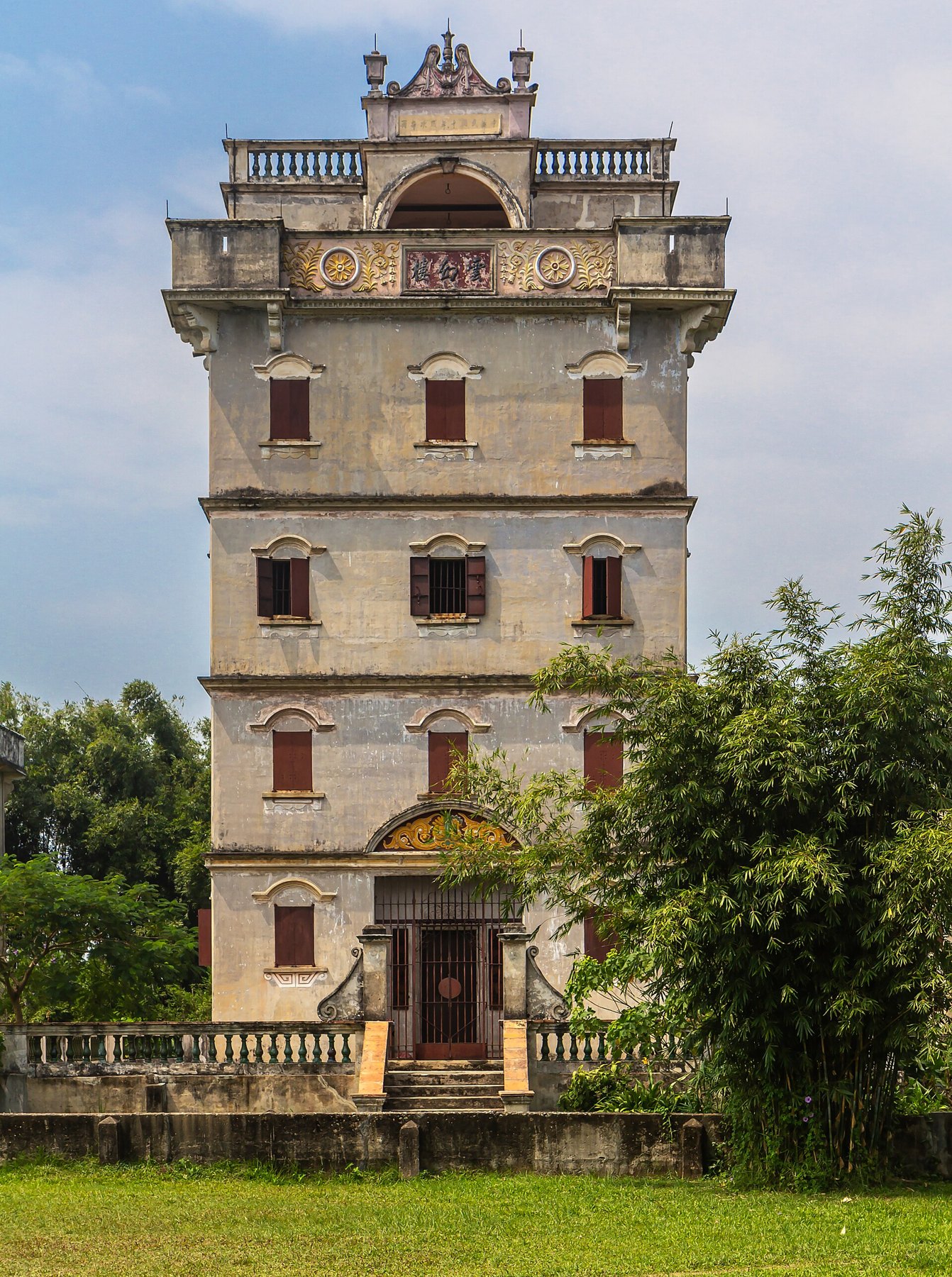
Give Zili village a generous half-day or more. UNESCO identifies it as one of the component groups. Look at the tower in relation to nearby houses and cultivated land: what can a raised floor see, and how does the building announce itself? Exterior comparison remains worthwhile when an interior is closed. Follow the permitted route and keep farm paths clear. A tower is not a climbing opportunity unless the visitor arrangements explicitly allow it.
Day 3: choose Majianlong or Jingjiangli
Choose one second cluster after checking access, instead of completing every group for the sake of a list. Majianlong offers a village-cluster comparison; Jingjiangli is another named component. Use the second visit to ask how materials, decoration and setting differ from the first. Agree the time for the return transfer and leave a buffer for onward travel. Our three-day format favours careful comparison over an ambitious sequence of rural drives.
What makes this route distinctive
UNESCO connects the towers to returning emigrants and the fusion of Chinese and Western forms. That gives the architecture a global context without making every façade a code you can decode alone. If you hire a guide, ask for a discussion of migration and village life rather than only a photo itinerary. Pack for heat and exposed rural walking, and check the weather before a long outing. Present-day access and historical significance are separate questions; verify both using the source links and current visitor information.
Before you go
Read / UNESCO diaolou heritage dossier ↗
External host; viewing availability, subtitles and access can vary. This is cultural background, not a live event schedule.
Source desk
Sources consulted 12 October 2026. Historical introductions and older reporting are labelled above. The sequence, pacing and viewing exercises are our editorial proposals; studio access, performances, transport, prices and opening require date-specific confirmation. This is researched writing, not a claim of a firsthand visit.