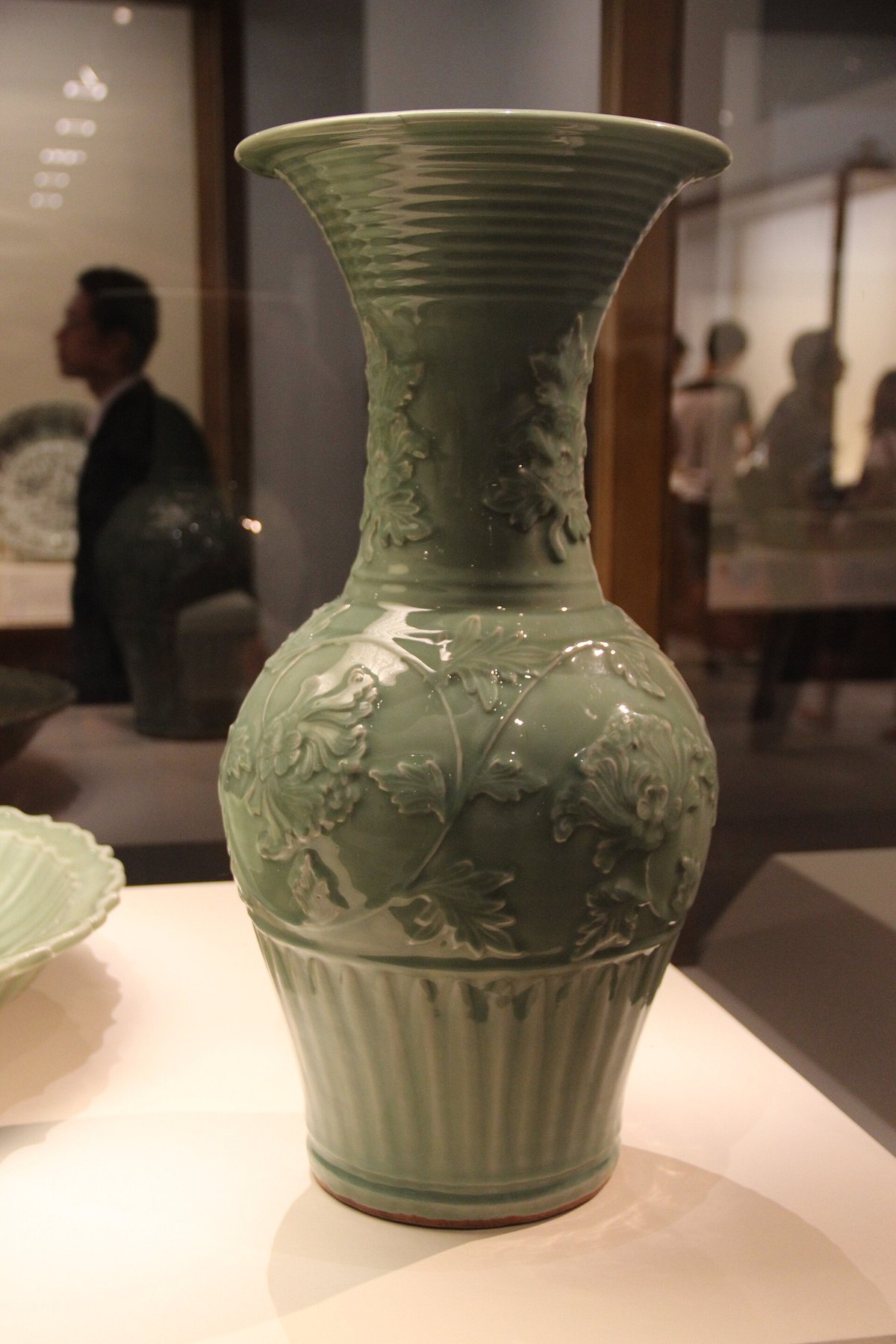
Look where the surface changes
A glaze appears different over a sharp edge, in a recess and on a broad surface. Move your position instead of relying on a single photograph. Museums may use lighting that makes a colour difficult to record accurately, so describe what you see in words as well. A useful notebook entry might say that the edge is lighter and the pooled area darker. It is observation, not a claim about a secret recipe.
Colour depends on making
The UNESCO account connects Longquan celadon to glaze preparation and controlled firing. That makes the final green an outcome of a process. Ask a contemporary maker which changes are intentional and which can only be judged after firing. Avoid expecting one workshop to represent every historical tradition. Listening to a maker explain uncertainty can be more memorable than hearing an exact colour name.
Keep the souvenir contemporary
Buy current work with an identified seller and a clear receipt. Check dimensions against the object you will actually receive. When a surface is marketed for table use, ask for the relevant product information rather than assuming that every decorative pot is suitable. If you want to see making rather than buy, say so at the booking stage and pay for the agreed time. The linked UNESCO film is a useful introduction before visiting, not a schedule for public demonstrations.
Before you go
Watch / UNESCO heritage film on celadon firing ↗
External host; viewing availability, subtitles and access can vary. This is cultural background, not a live event schedule.
Source desk
- Longquan Museum introduction · provincial portal ↗
- Dayao and contemporary makers · provincial portal ↗
- UNESCO · Longquan celadon ↗
Sources consulted 12 October 2026. Historical introductions and older reporting are labelled above. The sequence, pacing and viewing exercises are our editorial proposals; studio access, performances, transport, prices and opening require date-specific confirmation. This is researched writing, not a claim of a firsthand visit.