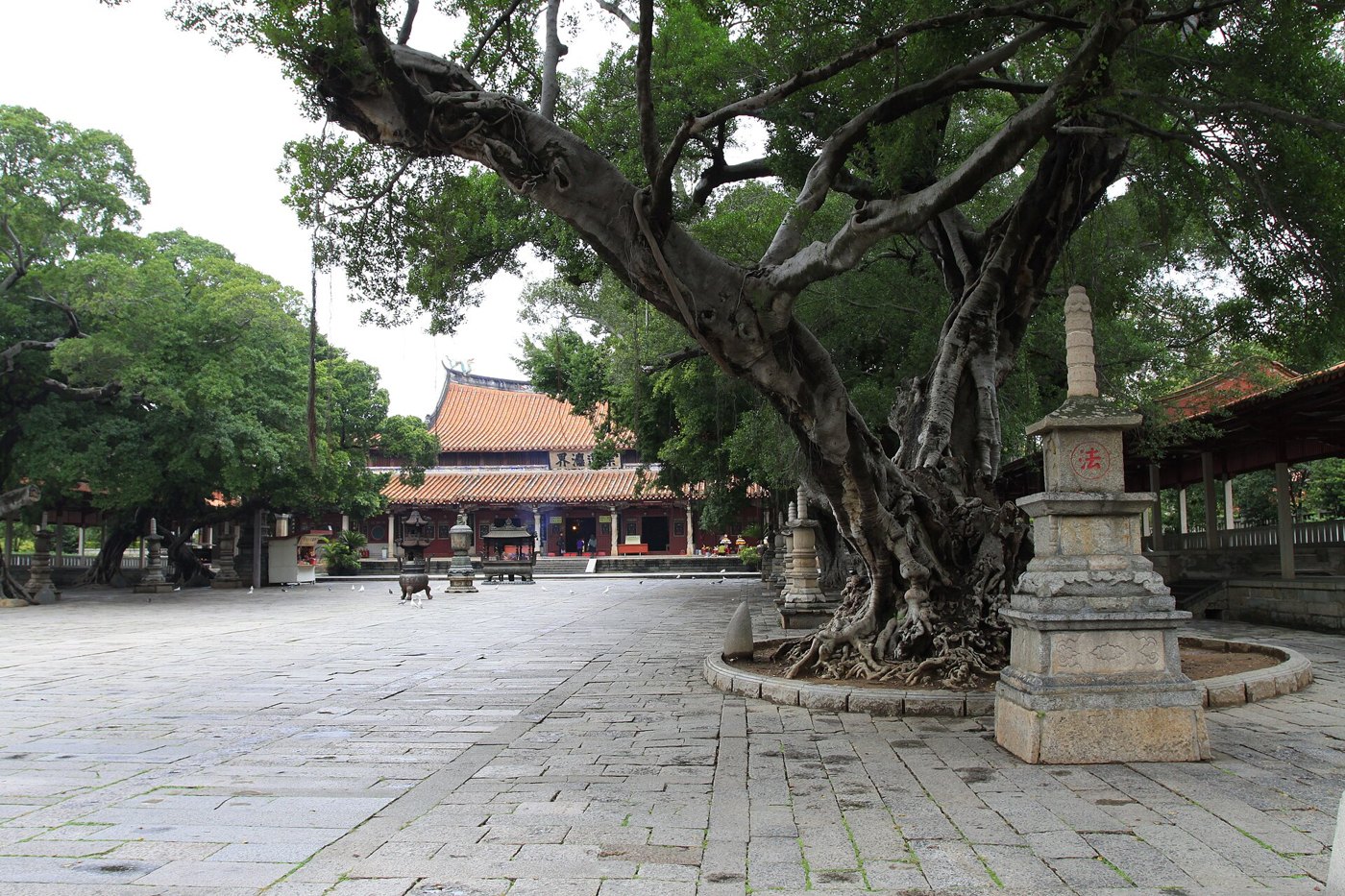
Day 1: three sites, three sets of questions
Use Kaiyuan Temple, Qingjing Mosque and Tianhou Temple as a considered old-city sequence. Ask what religious architecture reveals about people who travelled through a port. Keep the visits separate in your notes; religious buildings are not interchangeable examples of an exotic atmosphere. Dress for an active religious setting and follow posted rules. Our sequence is an editorial walking-and-transfer suggestion, not a claim that every interior is open. Confirm access before making a particular hall the point of the visit.
Day 2: leave room for Luoyang Bridge
Make Luoyang Bridge a dedicated outing rather than squeezing it between lunch and an evening train. UNESCO maps identify it as a component of the wider maritime heritage property. The useful question is how movement across waterways supported a port, not simply whether the bridge looks ancient. Check the return journey and leave time for close observation from permitted public areas. The listed heritage components are spread over a region; a world-heritage entry is not a single walkable attraction.
Day 3: a listening appointment
Arrange a Nanyin performance only after confirming the date, venue and public admission. UNESCO links the music to Minnan communities and diaspora life. Listen to its introductory film before travelling so that the instrumental texture is familiar. If there is no public performance, use the day for a museum or a second old-city visit; an unconfirmed show should not determine a non-refundable booking. Ask whether photography and recording are allowed, and avoid presenting a ceremonial event as entertainment arranged for visitors.
Names beat vague directions
Save the Chinese site names in this page and distinguish the old-city temple sequence from the bridge outing. Use current local transport information for the actual journey; we do not publish unsupported bus numbers or fixed taxi prices. This is a strong route for a traveller who enjoys religious history, sound and trade, even if they do not collect every UNESCO component. For a longer Fujian trip, compare onward travel before adding more scattered heritage sites.
Before you go
Watch / UNESCO Nanyin heritage film ↗
External host; viewing availability, subtitles and access can vary. This is cultural background, not a live event schedule.
Source desk
- UNESCO · Quanzhou maritime heritage ↗
- UNESCO · component-site map ↗
- UNESCO · Nanyin and introductory film ↗
Sources consulted 12 October 2026. Historical introductions and older reporting are labelled above. The sequence, pacing and viewing exercises are our editorial proposals; studio access, performances, transport, prices and opening require date-specific confirmation. This is researched writing, not a claim of a firsthand visit.