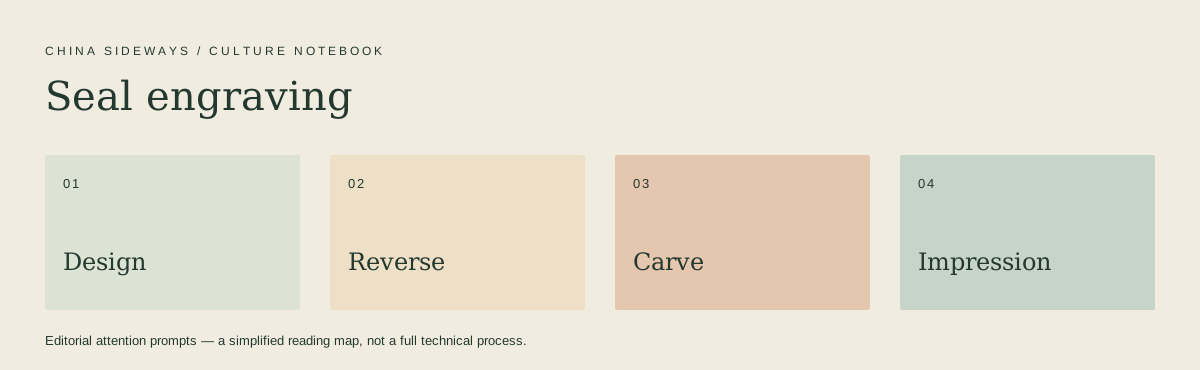
Look at the impression
UNESCO describes seal engraving as a design carved in reverse on a small surface. Begin with the printed impression rather than assuming you can read the carved face directly. Notice how lines divide the square, where empty space remains and how close a mark comes to an edge. You can observe these choices without knowing the characters. A language interpretation, however, should come from a knowledgeable person rather than your visual guess.
Compare the design and its proof
When a maker shows a design and an impression, ask what changed between them. A line that looks convincing on paper may behave differently at the scale of a seal. Do not touch tools or freshly prepared surfaces unless invited. A public demonstration may use an easy sample rather than a commissioned work; that is useful if the host explains the difference. The purpose is to see a design decision travel through material, not to judge the maker against a museum masterpiece.
Keep image and authorship together
Record who made the seal, what text or motif was chosen and how the impression was produced. A decorative seal on a reproduction is not automatically the signature of the person who made the object. If a label makes an attribution, retain the exact wording. Pair the topic with calligraphy in our database to see how writing and image can share a surface. The diagram here is a simplified orientation; it is not instruction for using engraving tools.
Source desk
Consulted 12 October 2026. Source pages establish cultural context; the viewing exercises and booking questions are editorial advice. No specific class, concert or private workshop is represented as currently bookable. Historical figures in heritage descriptions are not current practitioner statistics.