Follow the material backwards
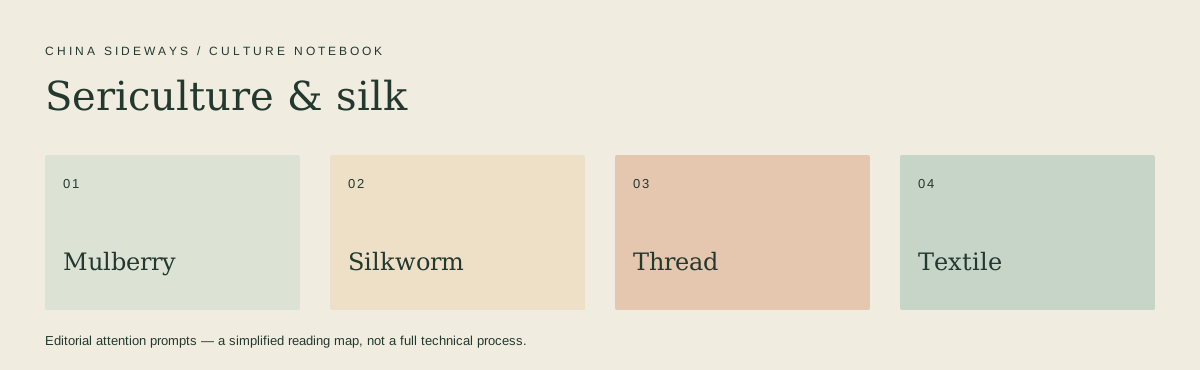
The UNESCO introduction places mulberry cultivation and silkworm raising within silk craftsmanship, alongside thread-making and weaving. Begin with a finished textile and work backwards in your notebook. Which stages are visible in the museum, and which remain outside the frame? The object becomes a link between agriculture and design rather than a luxurious surface with no origin. Keep the questions distinct: a fibre description is not the same as a weaving technique or a garment’s cut.
Let a museum widen the subject
The China National Silk Museum’s own site extends its remit into textiles and costume. Before visiting, choose whether your interest is in production, clothing, conservation or exchange. That choice makes a large collection easier to navigate. A permanent-gallery title can orient you, but temporary displays and access change. Check the current official visit information and do not build a trip around an exhibition listed in an old search result. Our link is to the institution, not a promise of one particular display.
Look for a chain rather than a slogan
A label about silk can contain several claims at once: material, place, technique and date. Read them separately. Notice which statement is supported by a displayed object and which is general background. A diagram of the material chain is simplified; real production has more stages and variations. Pair the subject with our Hangzhou article for a destination framework, then let the museum question set the pace of a half-day rather than squeezing textiles into a short shopping stop.
A textile-focused Hangzhou day beyond the souvenir shop ↗
Source desk
Consulted 12 October 2026. Source pages establish cultural context; the viewing exercises and booking questions are editorial advice. No specific class, concert or private workshop is represented as currently bookable. Historical figures in heritage descriptions are not current practitioner statistics.