Begin with an edge of ink
UNESCO associates Xuan paper-making with Jing County in Anhui and describes a craft using bark and rice straw. For a viewer, the useful first question is what the paper lets ink do. Look at an edge of a brush mark: is it sharply bounded, softly spread or changing within the same stroke? Do not identify a paper solely from a photograph of ink. The exercise trains attention to the support, while material claims still belong to a reliable label or maker.
Compare like with like
If a public demonstration offers sample papers, ask whether you may test the same ink and brush on each. Keep the pressure and amount of liquid as consistent as a beginner can. Label the samples with the information supplied rather than guessing afterwards. Differences in ink, sizing, paper and technique can all change the result. A tiny experiment is not a scientific assessment, but it can help you understand why artists think about a support before drawing on it.
The sheet has a long preparation
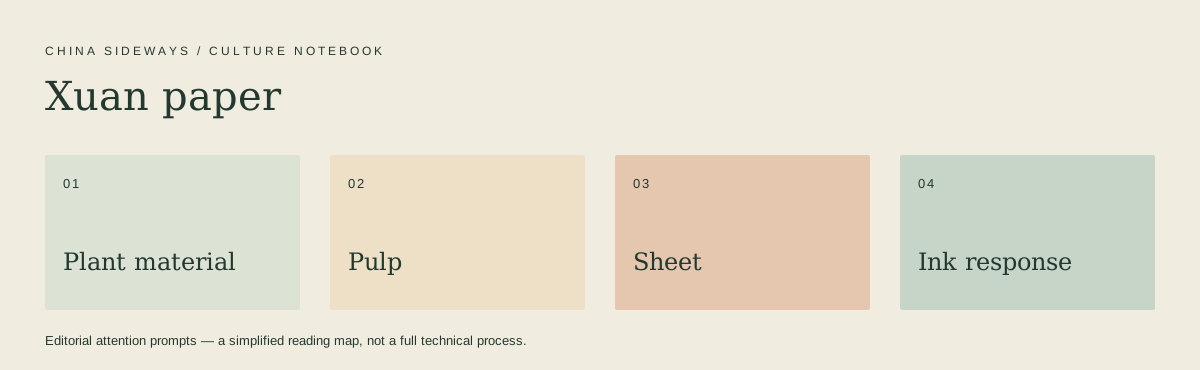
A brief museum demonstration may show one recognisable stage, not the full process of papermaking. Ask which material has already been prepared and which steps happen elsewhere. The simplified diagram on this page is an orientation, not a manufacturing recipe. Pair this subject with the Yangzhou printing article to compare paper as a surface for ink in different practices. Keep the distinction between seeing the process, trying a prepared activity and buying a sheet.
Source desk
Consulted 12 October 2026. Source pages establish cultural context; the viewing exercises and booking questions are editorial advice. No specific class, concert or private workshop is represented as currently bookable. Historical figures in heritage descriptions are not current practitioner statistics.