Prepare one scene rather than the whole canon
UNESCO connects Kunqu to Kunshan and describes a theatre of song, recitation and symbolic movement. Choose one scene with a synopsis before attempting a complete evening. Find out who the characters are, what each wants and where the scene begins. A summary is useful even when subtitles are available, because reading continuously can take your attention away from the performers. You do not need a complete history of Chinese opera to ask what changes between the start and end of a scene.
Notice when movement and sound meet
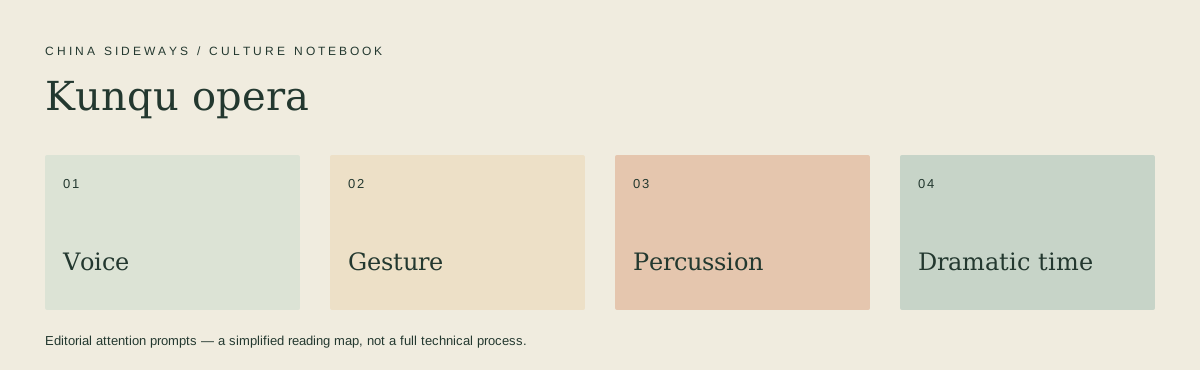
Watch for a gesture that receives a musical response, or a pause that changes the weight of a line. Do not assume every gesture has an obvious literal translation. If an organiser supplies an introductory talk, ask whether it explains the particular performance rather than opera in general. Keep one question for afterwards. It is more useful to notice an exact moment you did not understand than to leave with a vague claim that the art is mysterious or timeless.
Let unfamiliar pace be a question
A first viewing may feel slow in places. Instead of judging the entire form from one extract, observe what you were waiting for: plot information, a change of scene or a more familiar musical climax. That comparison can make a second viewing more rewarding. Our advice is an attention exercise, not a claim to decode the choreography. The linked heritage film introduces the form. The actual company, production and programme are what you should check before buying a ticket.
A Suzhou culture evening: how to choose a Kunqu performance ↗
Source desk
Consulted 12 October 2026. Source pages establish cultural context; the viewing exercises and booking questions are editorial advice. No specific class, concert or private workshop is represented as currently bookable. Historical figures in heritage descriptions are not current practitioner statistics.