Ask why this book was made
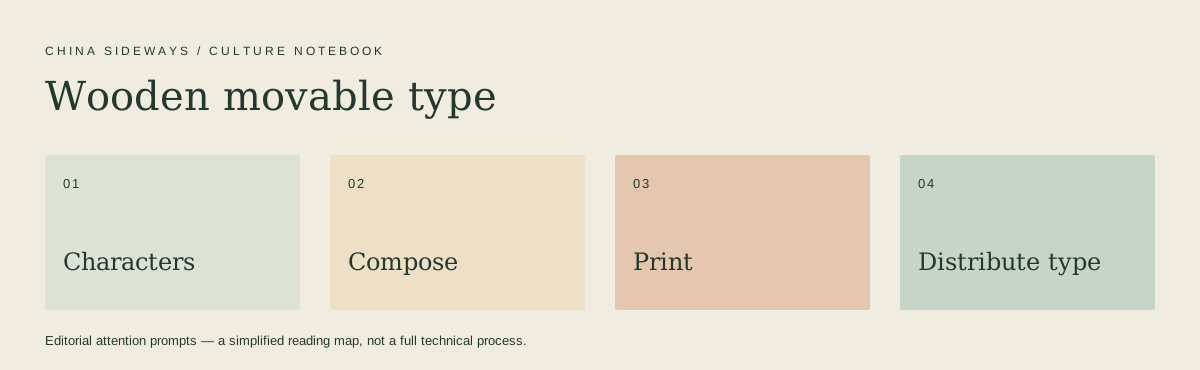
The heritage introduction links wooden movable-type printing in Rui’an to the making of clan genealogies. That points beyond equipment toward the purpose of a book. A visitor can ask who commissioned the volume, what information it records and how its finished copies are used. These questions should be answered by an identified source or host. Do not invent a family story because a book looks old or because the characters are unfamiliar.
A private record is not automatically a public exhibit
A genealogy may contain information that a family does not want photographed or circulated. Ask permission before copying a page, and accept limits on access. A public museum display and a working community commission are different settings. If a demonstration uses a sample, find out whether the text is historical, instructional or newly prepared. You can learn from the process without collecting private material as a souvenir.
Plan around an invitation, not a category
The database supplies context and the Chinese term 木活字印刷 for a more precise enquiry. It does not guarantee a public appointment in Rui’an. Ask the organiser whether a visitor can observe, which stages will be visible and whether interpretation is available. Do not quote old heritage-page counts of practitioners as current statistics. The valuable travel question is what access exists now and how a visit can respect the ongoing work, not how endangered the craft sounds in a headline.
Woodblock and movable type are different ways to make a page ↗
Source desk
Consulted 12 October 2026. Source pages establish cultural context; the viewing exercises and booking questions are editorial advice. No specific class, concert or private workshop is represented as currently bookable. Historical figures in heritage descriptions are not current practitioner statistics.